OPINION: U.S. arms sales to Taiwan is a dangerous breach of commitments
The US formally acknowledged this reality when it normalised relations with China in 1979. In the Joint Communiqué on the Establishment of Diplomatic Relations, Washington recognised the government of the PRC as the sole legal government of China and acknowledged the Chinese pos..
✨ Key Highlights
The United States' increased arms sales to Taiwan represent a dangerous breach of long-standing commitments, threatening both China’s sovereignty and the stability of China-US relations. This policy contradicts the "one-China principle" and international agreements, raising the risk of regional conflict.
- The US officially recognized the "one-China" policy in 1979, acknowledging Taiwan as an inseparable part of China.
- China has imposed countermeasures against US military-related companies and senior executives involved in these arms sales.
- The article emphasizes that China's reunification is an irreversible historical trend, with arms sales only increasing the risk of misjudgment and confrontation.
Continue Reading
Read the complete article from Capital News
Part of the Day's Coverage
China Outlines Diplomatic Priorities and Engages with Russia and Türkiye - January 2026
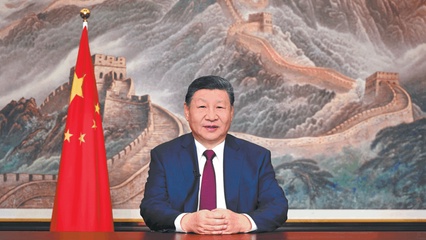
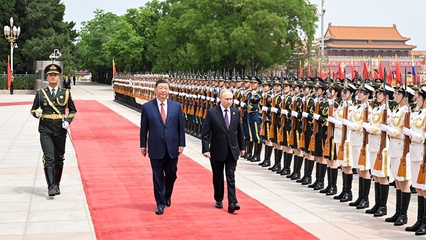
President Xi Jinping of China and President Vladimir Putin of Russia exchanged New Year greetings, highlighting their nations' comprehensive strategic partnership. Chinese Foreign Minister Wang Yi outlined China's diplomatic priorities for the upcoming year, which include hosting major domestic events and developing a new model of engagement with the United States. Concurrently, the United States' increased arms sales to Taiwan have been described as a dangerous breach of commitments that threatens China-US relations. In a separate diplomatic move, Türkiye's President Tayyip Erdogan signed a decision granting visa-free travel to Chinese citizens to boost trade and tourism. In his 2026 New Year message, President Xi also emphasized the need for solid work to promote high-quality development.