Ongore: Why small banks are uneasy about CBK’s core capital rule

'The high thresholds are proving to be way too high for small institutions to meet...'..
✨ Key Highlights
The Central Bank of Kenya (CBK) has mandated that all banks must achieve a minimum core capital of KSh 5 billion by December 2026, and KSh 10 billion by the end of 2029. This directive, aimed at bolstering financial stability, has sparked unease among small (Tier 3) banks, which fear the unrealistic timeline and potential industry distress.
- 12 banks in the Tier 3 category had not met the core capital threshold as of September 2025.
- The CBK views core capital as a measure of a bank's financial health and a safeguard against financial turbulence for customers.
- Small banks are reluctant to pursue mergers and acquisitions (M&A) due to strategic, financial, and operational dangers, in addition to socio-cultural and governance barriers.
Continue Reading
Read the complete article from Nation Business
Part of the Day's Coverage
NSSF Flagged for Irregular Payments, CBK Sets Bank Capital Rules, and CS Sued Over Finance Act - February 2026
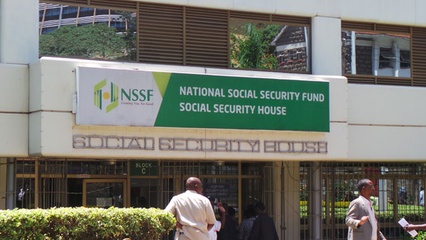
The Auditor General has flagged the National Social Security Fund (NSSF) over irregular payments of acting and special duty allowances exceeding Sh21.2 million. This was due to employees serving in acting capacities beyond the allowed six months without proper approval. In a separate directive, the Central Bank of Kenya (CBK) has mandated that all banks must achieve a minimum core capital of KSh 5 billion by December 2026, and KSh 10 billion by the end of 2029. This directive has caused unease among smaller Tier 3 banks. Additionally, Trade Cabinet Secretary Lee Kinyanjui is facing a lawsuit for allegedly failing to implement a part of the Finance Act 2025. The lawsuit concerns a provision that exempted unprocessed glass used by local manufacturers from excise duty.


Kenya's news, briefed daily
Daily Briefs with audio, your topics, and breaking stories.


Related News
Take Kenya's news with you
Breaking stories, daily briefs, and the topics you follow - on your phone, free.